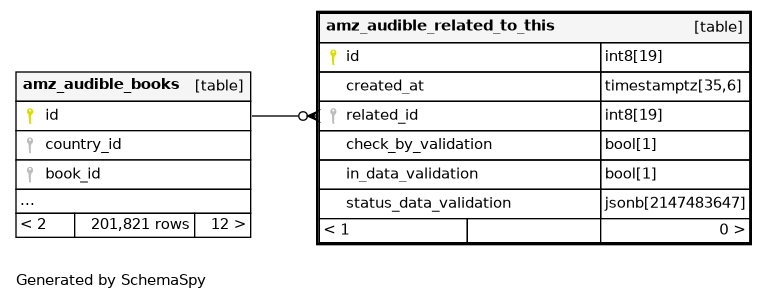
amz_audible_related_to_this

-1 rows


Description

Certainly! This table represents Amazon’s AWS S3 Bucket relationships. The three fields in the table are as follows:

  • ID: This is a unique identifier for each row in the table that refers to the corresponding record in a bucket or vice versa. You can retrieve this value using either field names or primary or foreign keys which specify the relationship between tables.

  • Created_at: This field contains the date and time when an AWS S3 Bucket was created. When creating an S3 Bucket, you will see this date printed in its UI interface. The created_at property is set to UTC TIMESTAMP(8) by default.

  • Related_id: This field represents a record that maps to the current row’s ID on the other side of the relationship (bucket object or bucket properties). For instance, if Bucket A belongs to User B, they will have an associated entry with the ID that matches the Name and URL of their public access link.

This data table is useful for tracking related objects in various AWS S3 services like bucket details, permissions, copies/snapshots, file history, and more to help with system configuration and management.

Suppose you are a Machine Learning Engineer working on an application that needs to track the number of Bucket-Object pairs based on their relation and other conditions using AI algorithms, but a part from AWS S3 service data, the table is also being utilized by your business clients in many various ways. The main requirement for your algorithm is not only retrieve current bucket objects related with an S3 Bucket ID/Name but additionally keep track of user activity history in each bucket’s properties while keeping it as accurate as possible and making sure all the client-specific criteria are met when predicting the users’ behaviour or intent to use this AWS service. Here’s a unique scenario which your clients are dealing with: 1. Each bucket can have one, 2, or potentially more “related_id”. 2. A “related_id” can be accessed only by a S3 Bucket and associated objects once in the life of both parties (client/cloud service provider). After that period, access becomes blocked, making those related data points unusable. 3. If there are two or more buckets with the same owner, they have identical “related_id”, but each bucket can only store one “related_id”. 4. The number of available public API versions are fixed; new applications need to get a different version of S3 API compared to existing applications when accessing these related data points. Each client-side application might want to be using this information at their own convenience or with some variation based on conditions they specify while requesting the access to bucket objects tied to them (like, user, type of use). 5. An “access_count” feature is also desired: every time an S3 Bucket records an interaction with any of its associated objects within a certain window of time frame, this counter increases by one and stays active as long as the object/s are being interacted with (uploaded or downloaded). Given that you now need to implement advanced AI algorithms, keeping user security intact while maintaining operational performance and delivering real-time results is your aim. You have a dataset that consists of over 3000 S3 Buckets along with their associated objects, “related_id” values, the date and time both for bucket creation and first interaction between the object/s and this bucket. You need to design an AI system where you should: 1. Identify which buckets are safe from future use based on their history of user access attempts and keep it updated continuously. 2. Design a classification model that will take into account all these variables (bucket, related_id, date/time, interactions) to predict if a given bucket will be considered for user access in the future or not, with a confidence score ranging from 0-1 and which API version of S3 should be used to access this bucket. 3. Use it successfully during different times (e.g., weekend vs. weekdays), while predicting related data points using those same variables (bucket, related_id, date/time, interactions), will be impacted by the user’s behaviour at those specific time periods. 4. Consider possible improvements in your AI algorithm as time progresses; maybe you want to add or update fields that might become helpful. Maybe some data may need removing due to privacy reasons (e.g., if the access was invalid). For this scenario, the following question should be asked and solved by utilizing the provided database: Is there any strategy for predicting future use of S3 Buckets related with a specific client/user who is using AWS Cloud services? If yes, please provide a detailed solution including how you would decide on which API version (if any), to which bucket objects, etc., when making

Columns

Column Type Size Nulls Auto Default Children Parents Comments
id int8 19 null
created_at timestamptz 35,6 null
related_id int8 19 null
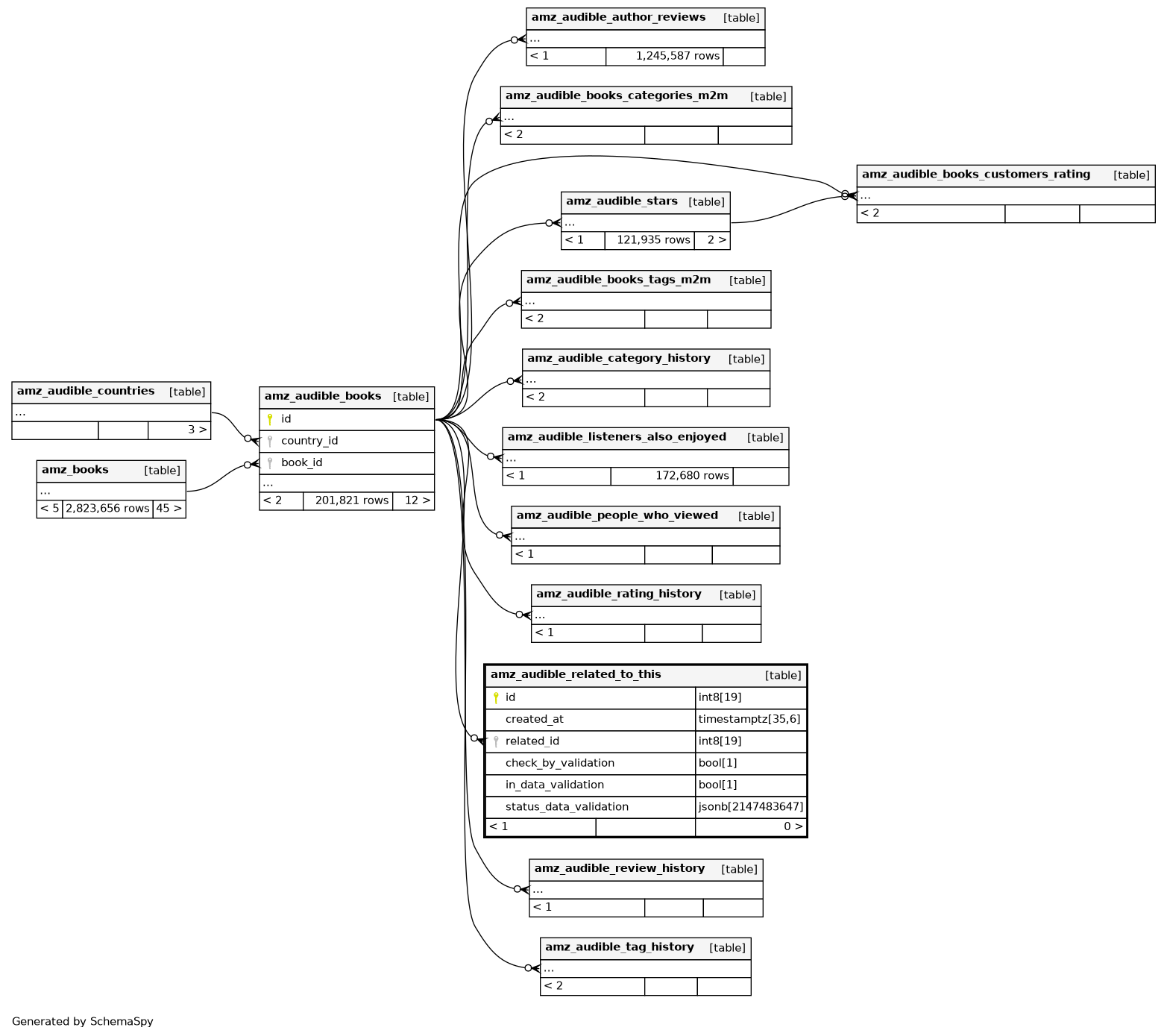
amz_audible_books.id amz_audible_related__related_id_09682afd_fk_amz_audib R
check_by_validation bool 1 null
in_data_validation bool 1 null
status_data_validation jsonb 2147483647 null

Indexes

Constraint Name Type Sort Column(s)
amz_audible_related_to_this_pkey Primary key Asc id
amz_audible_related_to_this_related_id_09682afd Performance Asc related_id

Relationships