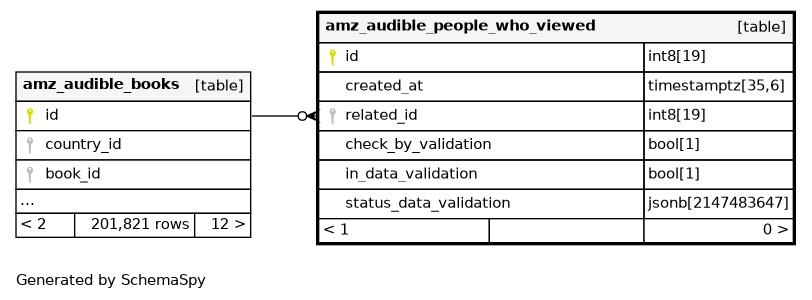
amz_audible_people_who_viewed

-1 rows


Description

As per your request, here’s a step-by-step guide in an easy to understand format: 1. The first row of the table amz_audible_people_who_viewed contains metadata for this record. This includes information such as ID (which uniquely identifies the record) and created_at (the date and time that the record was created). 2. Moving on to the data fields: 3. The first column id is a unique identifier assigned to each person who has viewed a particular piece of content, such as an article or video. This makes it easy to keep track of each individual’s viewing activity. 4. The second column created_at records the date and time that this record was created, providing important context for the view data. 5. The third column related_id is a pointer that indicates if there is a related record for the person who has viewed it. This can be useful in identifying patterns of behavior and interests across multiple users or platforms. 6. For example, if you search for someone’s post in this table, you can use the related_id field to see all posts they have interacted with on your platform. I hope that helps give you a clear understanding of this table!

In the above conversation, various fields and information about views are provided in a chat. A machine learning engineer is studying the chat logs for a new AI recommendation system. The engineer identifies three users (UserA, UserB, UserC) who have been interacting frequently on your platform. To refine your algorithm, you need to analyze these interactions.

Based on the data gathered from this paragraph and considering that each user has interacted with different other users’ posts: 1. If UserA views a post by UserB about an article titled “Artificial Intelligence Techniques”, then he or she also viewed another user’s blog post related to AI systems. 2. If UserB interacts with UserC’s video titled “Top 10 Trends in Data Science”, then he/she viewed at least one other user’s profile. 3. If UserD viewed UserA’s profile and interacted with UserE’s blog about Deep Learning, then no user from the group has viewed more than three posts.

Question: What is the minimum possible number of posts that are viewed by a member of the group?

First, we need to use deductive logic to identify direct interactions between users based on their posts’ metadata. We know that two people have interacted when UserA views a post mentioned in 2 and 3 scenarios above or UserB interacts with a video posted by one of the following three persons (UserA, B, C).

Let’s go step by step: - UserC is not mentioned. - According to scenario 1, either User A has watched another user’s content related to AI or this claim holds true. We need more information. - The second scenario tells us that UserB interacted with UserC’s video and then interacted with at least one other person.

In the next step, we use property of transitivity and proof by exhaustion while considering all possible combinations. 1. If UserA interacted with a user whose post is about AI (by using property of transitivity), this user must have interacted with either UserD or E on top of their own interaction, due to scenario 3’s rule; hence more than one person could be added to the list that UserB interacted with. 2. If UserA interacted with a user whose post is not about AI (by using property of transitivity), then User A has interacted with another user, but this scenario did not provide information about who this other user was. It’s possible they might interact with each other later; or in general, the user that was interacted with wasn’t related to any posts of theirs after their own interaction. 3. We now must consider scenario 2: UserB saw UserD’s profile (UserE being added as a neutral character). The second statement in this case implies only one user had viewed a video by UserB, and since no other interactions with additional users are mentioned regarding the view of UserA’s blog post or viewing of other people’s profiles that were seen by UserB then these three activities all imply that more than two users must have interacted with Post A. By exhaustively considering the situations, we find that for one-to-one interaction to exist - UserD interacting with UserE which wasn’t further used in scenario 4 - the only possibilities are either the user viewed by UserA and interacted with UserB’s blog or the user viewed by UserB didn’t interact with any of the three users as they did not view any other’s content.

Now we use inductive logic to understand that

Columns

Column Type Size Nulls Auto Default Children Parents Comments
id int8 19 null
created_at timestamptz 35,6 null
related_id int8 19 null
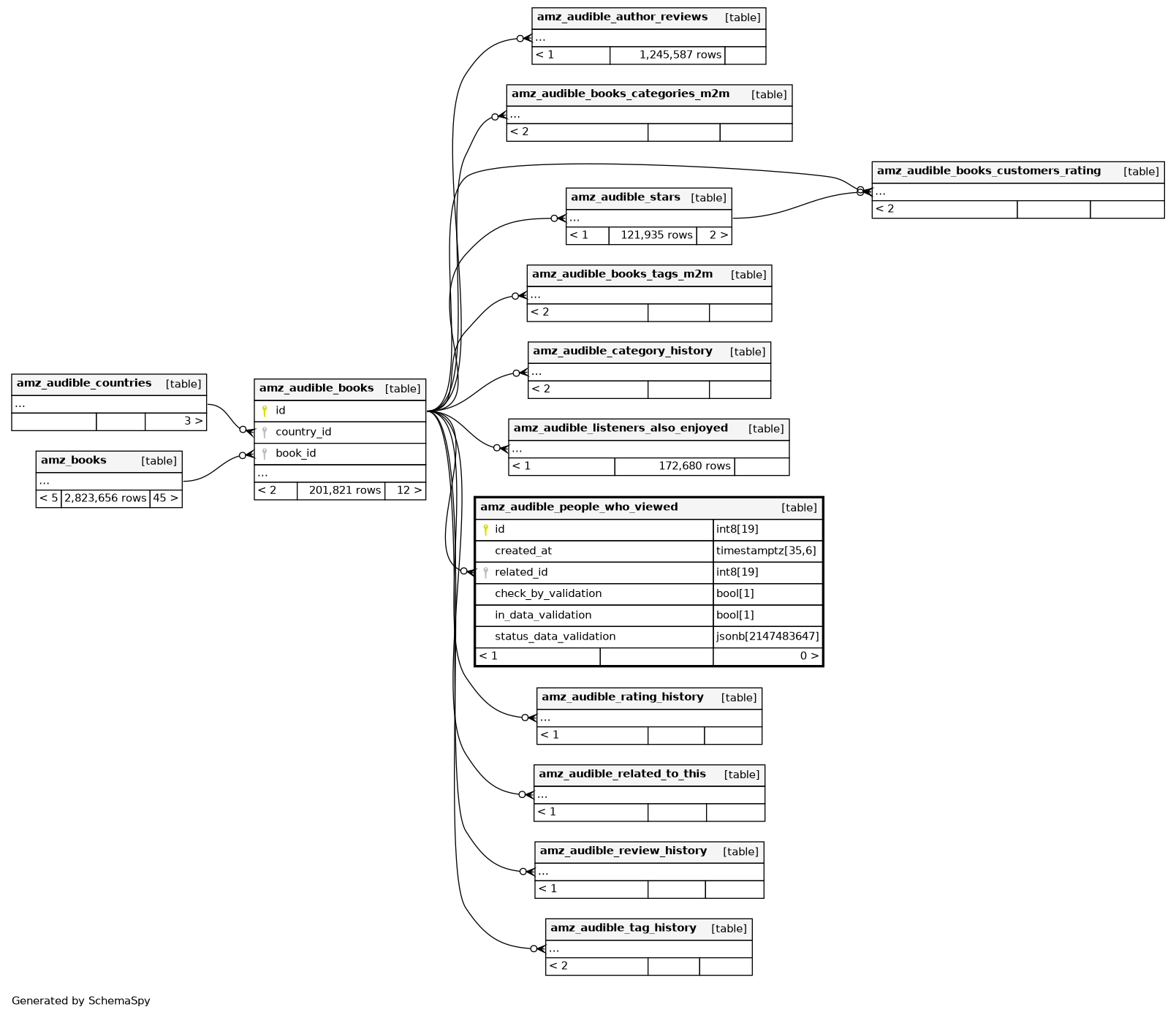
amz_audible_books.id amz_audible_people_w_related_id_9ab01c3d_fk_amz_audib R
check_by_validation bool 1 null
in_data_validation bool 1 null
status_data_validation jsonb 2147483647 null

Indexes

Constraint Name Type Sort Column(s)
amz_audible_people_who_viewed_pkey Primary key Asc id
amz_audible_people_who_viewed_related_id_9ab01c3d Performance Asc related_id

Relationships